
In an increasingly interconnected, fast-paced, and transparent world, the significance of ethical practices has elevated from a regulatory obligation to a core strategic imperative. Whether in corporate boardrooms, technological development labs, non-profit institutions, or daily personal interactions, operating with integrity serves as the cornerstone of long-term trust, sustainability, and human progress.
Historically, ethics was often framed through theoretical philosophy or minimal legal compliance—doing just enough to avoid fines, litigation, or public backlash. Today, however, stakeholders ranging from consumers and employees to investors and regulators demand proactive moral accountability. Modern ethical practice requires individuals and organizations to actively evaluate the broader impact of their decisions on human well-being, social equity, environmental stability, and technological safety.
This comprehensive guide explores the core dimensions of ethical practices across leadership, sustainability, technology, and organizational culture, outlining how moral principles can be systematically translated into daily action.
1. The Core Foundations of Moral Integrity
At its fundamental level, ethical behavior is grounded in a set of universal principles designed to foster fairness, human dignity, and collective trust. Translating these abstract moral concepts into repeatable practices requires a clear understanding of four foundational tenets:
- Integrity: Consistency between declared values and actual behavior. Integrity means adhering to ethical principles even when no one is watching and even when doing so presents significant personal or financial costs.
- Transparency: Open, honest, and accessible communication. In practice, transparency eliminates hidden agendas, prevents deceptive marketing, and ensures that decision-making processes are clear to affected stakeholders.
- Fairness and Justice: Treating all individuals impartially, without bias or favoritism. Justice demands equitable distribution of opportunities, fair compensation, and objective accountability for wrongdoings.
- Accountability: The willingness to accept ownership of actions, outcomes, and mistakes. An ethical individual or organization does not shift blame or obfuscate results when outcomes fall short of expected standards.
The Shift from Compliance to Moral Purpose
A common structural trap in modern management is confusing legal compliance with ethical integrity. Compliance focuses on adherence to external laws, codes, and regulations—asking the question, “Is this legal?” Ethical practice, conversely, goes a step further by asking, “Is this right?”
Organizations that operate solely on compliance often find loopholes to maximize short-term advantage at the expense of long-term trust. In contrast, value-driven institutions use moral principles as a North Star, ensuring that strategic choices actively promote well-being even in areas where formal legislation has not yet caught up with modern realities.
2. Ethical Leadership and Organizational Tone
Ethical culture rarely emerges spontaneously from the bottom up; it is modeled, reinforced, and sustained by leadership. Leaders establish the “tone at the top,” defining what behaviors are rewarded, tolerated, or penalized within an institution.
Characteristics of an Ethical Leader
Ethical leaders do not merely preach moral codes; they embody them through everyday decision-making. Key characteristics include:
- Empathy and Human-Centric Decision Making: Recognizing that employees, clients, and community members are human beings with inherent dignity, not merely economic inputs or metrics on a balance sheet.
- Psychological Safety: Creating an environment where subordinates feel safe to raise concerns, point out operational risks, or admit errors without fear of retaliation or public humiliation.
- Incentive Alignment: Ensuring that performance targets and sales quotas do not inadvertently encourage unethical shortcuts, fraudulent reporting, or corner-cutting.
- Moral Courage: The willingness to take a stand against popular opinion, board pressure, or financial incentive when a proposed direction violates organizational principles.
The Ripple Effect of Ethical Modeling
When executive leadership consistently demonstrates integrity, the impact radiates across the entire workforce. Research in organizational psychology confirms that employees working under ethical leaders exhibit higher job satisfaction, greater organizational loyalty, and significantly reduced rates of workplace misconduct. Conversely, when leaders turn a blind eye to moral compromises, unethical practices quickly permeate through every level of the company.
3. Environmental Sustainability and Corporate Responsibility
In the 21st century, ethical practices extend far beyond interpersonal interactions and financial transparency—they encompass an organization’s relationship with the planet and society. Corporate Social Responsibility (CSR) and Environmental, Social, and Governance (ESG) frameworks have transitioned from voluntary PR exercises to mandatory ethical benchmarks.
The Triple Bottom Line
Modern ethical business operates on the framework of the Triple Bottom Line, measuring success across three distinct pillars:
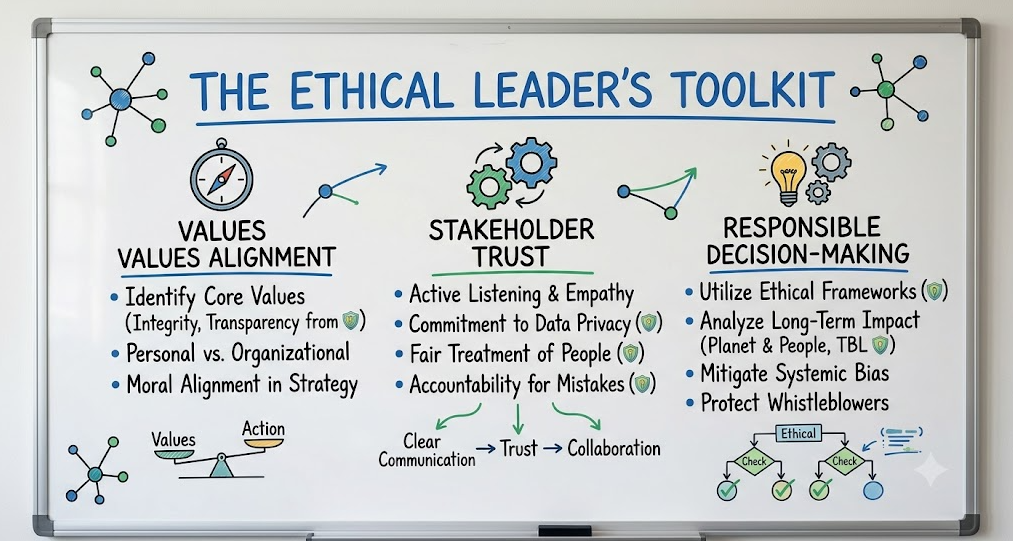
- People (Social Equity): Assessing how operations affect employees, local communities, supply chain workers, and marginalized populations.
- Planet (Environmental Stewardship): Minimizing ecological footprints by reducing carbon emissions, eliminating waste, conserving water, and utilizing renewable materials.
- Profit (Economic Viability): Generating sustainable long-term economic returns without exploiting labor, depleting finite natural resources, or deceiving investors.
Combating “Greenwashing”
As public demand for eco-conscious products grows, so too does the temptation for organizations to engage in greenwashing—the deceptive practice of marketing a company or product as environmentally friendly without implementing real, substantive operational changes.
Ethical environmental practice requires rigorous third-party auditing, transparent reporting of carbon footprints, verified sustainable sourcing across supply chains, and measurable progress toward real sustainability targets rather than vague marketing claims.
4. Data Ethics, Digital Privacy, and AI Integrity
The rapid acceleration of technological innovation—spanning artificial intelligence, predictive analytics, biometrics, and mass data harvesting—has introduced complex moral dilemmas that previous generations never faced. Ethical practice in the digital age requires active stewardship over user data and algorithmic decision-making.
Key Dimensions of Digital Ethics
| Focus Area | Ethical Challenge | Practical Implementation |
|---|---|---|
| Data Privacy & Consent | Exploitative harvesting and selling of personal user information. | Implement strict opt-in consent protocols, clear data ownership policies, and data minimization. |
| Algorithmic Bias | Automated tools reinforcing systemic biases in hiring, lending, and law enforcement. | Regularly audit machine learning datasets and models for disparate impact across demographic groups. |
| AI Transparency | “Black box” AI algorithms making life-altering decisions without explainability. | Prioritize explainable AI architectures and maintain human-in-the-loop oversight for high-stakes decisions. |
| Misinformation & Disinformation | Malicious leverage of deepfakes and automated bot networks to alter public perception. | Establish clear provenance standards, content authentication protocols, and responsible platform moderation. |
Designing Ethical Artificial Intelligence
As AI systems take over tasks previously performed by humans—such as medical diagnostics, candidate screening, loan approvals, and judicial risk assessment—the ethical responsibilities of developers and deployed organizations become paramount.
Designing ethical AI systems involves embedding fairness, safety, privacy, and accountability directly into the software development lifecycle rather than attempting to patch ethical flaws after deployment.
5. Building and Nurturing an Inclusive Workplace Culture
An organization cannot claim to operate ethically if its internal workplace culture ignores equity, safety, respect, and diversity. Ethical workplace practices prioritize human well-being, fostering environments where every team member can thrive regardless of background.
Pillars of Workplace Ethics
- Diversity, Equity, and Inclusion (DEI): Actively dismantling structural barriers to ensure equal access to hiring, compensation, mentorship, and executive advancement for underrepresented groups.
- Fair Compensation and Labor Standards: Paying living wages, providing comprehensive healthcare and personal benefits, and upholding fair work schedules across all corporate tiers and global supply chains.
- Whistleblower Protection: Establishing robust, anonymous reporting channels that protect employees who report unethical conduct, harassment, or financial fraud from career retaliation.
- Mental Health and Work-Life Integration: Recognizing that excessive workloads, toxic management styles, and chronic burnout represent fundamental failures in an employer’s duty of care.
Operationalizing Ethics in Daily Routines
To move ethics from an abstract corporate policy binder into daily operations, institutions must embed moral evaluation into standard operating procedures:
- Mandatory Scenario-Based Training: Replace generic compliance quizzes with interactive workshops focused on complex, real-world ethical dilemmas specific to employee roles.
- Ethics Officers and Committees: Appoint dedicated, independent ethics officers or advisory boards empowered to review strategic initiatives and audit organizational practice.
- Ethical Risk Audits: Include ethical considerations alongside traditional financial and operational risk assessments during strategic planning and product rollouts.
- Reward Systems for Integrity: Publicly recognize and reward staff who demonstrate exceptional integrity, even when doing so results in short-term trade-offs.
Sustaining Moral Commitment in a Changing World
Ethical practice is not a static checklist to be completed once and set aside; it is an ongoing process of reflection, evaluation, and adaptive practice. As society evolves, new technological capabilities, economic realities, and environmental constraints will continuously generate unprecedented moral questions.
Organizations and individuals that prioritize ethics do not promise absolute perfection. Instead, they commit to continuous learning, rigorous self-scrutiny, transparent communication, and a relentless dedication to serving the broader public good. By grounding strategies and daily habits in ethical principles, leaders can build institutions that withstand crisis, foster deep trust, and leave a positive lasting impact on society.