
In the world of search engine optimization, one truth has remained constant even as algorithms evolve: content is still king. But not just any content — valuable content. Google and other search engines have become remarkably sophisticated at distinguishing between content that genuinely helps users and content that exists purely to game rankings. If you want sustainable SEO success in 2026 and beyond, you need to focus on creating content that provides real value to your audience while satisfying the technical requirements search engines look for.
This article breaks down exactly what “valuable content” means, and how you can consistently produce it for your website, blog, or business.
Understanding What “Valuable Content” Means in SEO
Before diving into tactics, it’s important to define what valuable content actually looks like from an SEO perspective. Valuable content isn’t just well-written — it’s content that:
- Answers a specific question or solves a specific problem
- Provides information the reader can’t easily find elsewhere, or presents it more clearly
- Is trustworthy, accurate, and up to date
- Matches what the searcher was actually looking for when they typed their query
- Encourages engagement — reading time, shares, backlinks, and return visits
Search engines use hundreds of signals to evaluate content quality, but many of these signals are proxies for one simple question: “Did this content genuinely help the person who searched for it?” If your content answers yes to that question consistently, rankings tend to follow.
It’s also worth noting that valuable content isn’t static. What counted as valuable five years ago — thin 500-word posts stuffed with keywords — is now often penalized. Search engines increasingly reward depth, originality, and demonstrated expertise over keyword density alone.
Start with Deep Audience Research
You cannot create valuable content without first understanding who you’re creating it for. Too many content strategies start with a keyword tool and end with an article — skipping the most important step: understanding the human being on the other end of the search query.
Effective audience research involves:
- Identifying your ideal reader’s pain points. What are they struggling with? What questions keep coming up in customer support tickets, sales calls, or community forums?
- Studying the language they use. People often search using very different phrasing than industry jargon. Tools like AnswerThePublic, Google’s “People Also Ask” boxes, and Reddit threads reveal the actual words your audience uses.
- Segmenting by intent and experience level. A beginner and an expert searching for the same topic need very different content depth and tone.
- Building simple personas. Even a lightweight persona — job role, goals, obstacles, preferred content format — helps keep writing focused and relevant rather than generic.
The content that ranks and converts best is almost always the content that feels like it was written specifically for the reader’s situation, not content that could apply to anyone.
Match Content to Search Intent
Search intent refers to the underlying reason behind a person’s search query. Broadly, intent falls into four categories:
- Informational — the searcher wants to learn something (“what is technical SEO“)
- Navigational — the searcher wants to find a specific site or page (“Ahrefs login”)
- Commercial investigation — the searcher is comparing options before buying (“best CRM software for small business”)
- Transactional — the searcher is ready to take action (“buy running shoes online”)
Creating valuable content means matching your format and depth to the intent behind the keyword you’re targeting. A commercial-intent query deserves a comparison guide or product page, not a 3,000-word philosophical essay. An informational query deserves a thorough, well-organized explainer — not a thinly veiled sales pitch.
One of the fastest ways to check intent is to simply search your target keyword yourself and study what’s currently ranking. If the top ten results are all list-style buying guides, a single-product review probably won’t outrank them, no matter how well it’s written. Google has already told you, through its rankings, what format satisfies that particular query.
Create Comprehensive, In-Depth Content

While word count alone is not a ranking factor, there’s a strong correlation between comprehensive content and strong rankings — because comprehensive content tends to satisfy more of the searcher’s underlying questions in one place, reducing the need for them to click back to search results and try another page (a signal called “pogo-sticking” that search engines watch closely).
To build genuinely comprehensive content:
- Cover the topic from multiple angles. Don’t just answer the primary question — address the follow-up questions a curious reader would naturally have next.
- Use “People Also Ask” and related searches as a checklist of subtopics to include.
- Avoid padding. Comprehensive doesn’t mean repetitive. Every paragraph should add new information, not restate the last one in different words.
- Structure content so both skimmers and deep readers are served — clear headers, bullet points, and summaries let skimmers extract value quickly, while the full body rewards readers who want depth.
Depth builds authority. A page that thoroughly covers a topic naturally attracts more backlinks, more time on page, and more return visits — all signals that reinforce its ranking over time.
Focus on E-E-A-T (Experience, Expertise, Authoritativeness, Trustworthiness)
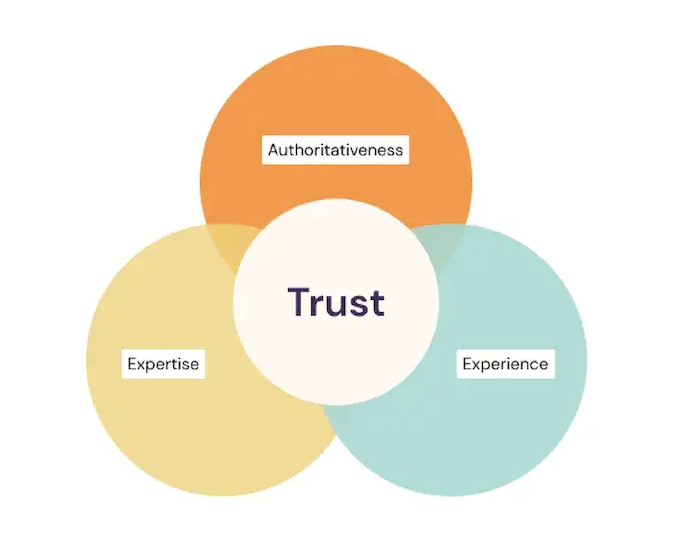
Google’s quality guidelines place heavy emphasis on E-E-A-T, especially for topics that could affect a person’s health, finances, or safety (often called “Your Money or Your Life” topics). While E-E-A-T isn’t a single, direct ranking factor you can “optimize” in isolation, it strongly shapes how content is evaluated by both algorithms and human quality raters.
Practical ways to strengthen E-E-A-T in your content:
- Add real author bios with relevant credentials, experience, or expertise, linked to an author page.
- Cite credible, authoritative sources for statistics, studies, and claims rather than making unverifiable assertions.
- Show first-hand experience where relevant — original photos, screenshots, test results, or personal case studies demonstrate the “Experience” component Google added to E-A-T in 2022.
- Keep information accurate and update it when facts change. Outdated statistics or broken advice erode trust quickly.
- Build topical authority by consistently publishing well-researched content within your niche, rather than jumping between unrelated subjects.
Trust signals compound over time. A single excellent article helps, but a body of consistently trustworthy content is what search engines — and readers — come to rely on.
Use Data, Examples, and Original Insights

One of the clearest ways to differentiate valuable content from generic, AI-generated filler is originality. Search engines are increasingly good at identifying content that simply rehashes what’s already ranking versus content that adds something new to the conversation.
Ways to inject originality:
- Conduct your own small-scale research or surveys and share the findings — original data is highly link-worthy.
- Include specific examples, case studies, or anecdotes rather than speaking only in abstractions.
- Offer a clear point of view or unique framework, rather than a neutral summary of what everyone else has already said.
- Use original visuals — custom graphics, screenshots, or photos — rather than generic stock imagery whenever possible, since these are harder for competitors to simply copy.
Content that offers something genuinely new tends to earn more organic backlinks, which remains one of the strongest ranking signals available.
Optimize for Readability and Structure
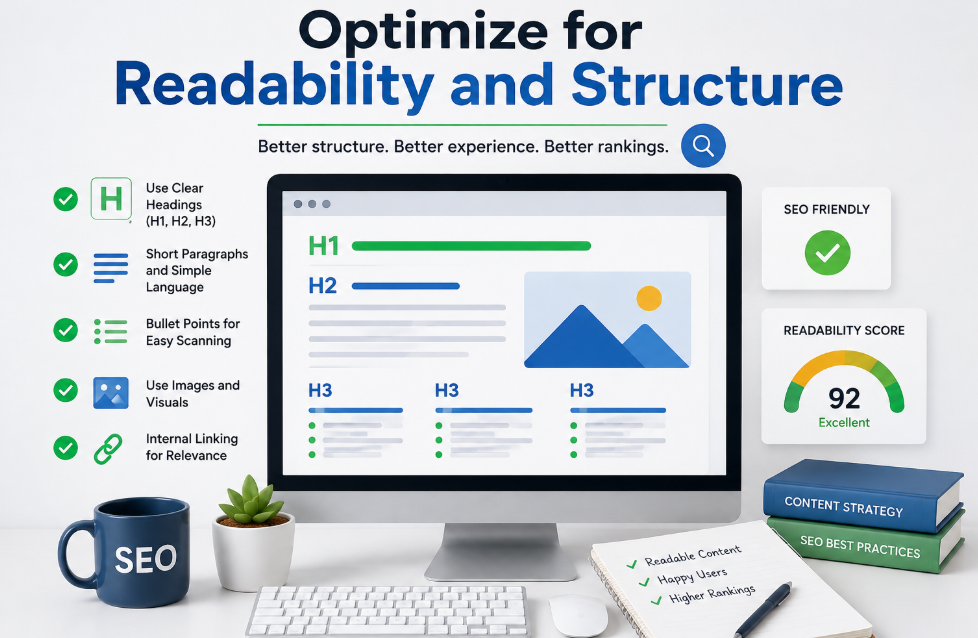
Even the most valuable, well-researched content will underperform if it’s difficult to read. Structure and formatting directly affect how long users stay on a page and how easily search engine crawlers can understand the content’s organization.
Best practices include:
- Use descriptive, hierarchical headings (H2s, H3s) that outline the content’s structure and naturally incorporate relevant subtopics.
- Write short paragraphs — two to four sentences is often ideal for on-screen reading.
- Use bullet points and numbered lists to break up dense information.
- Bold key phrases sparingly to help skimmers catch the main points.
- Maintain a natural, conversational tone appropriate to your audience rather than overly formal or robotic phrasing.
- Ensure mobile readability, since the majority of search traffic now comes from mobile devices.
Good structure isn’t just about aesthetics — it directly supports SEO because search engines parse heading hierarchies to better understand what a page covers and how relevant it is to a given query.
Keep Content Updated and Evergreen

Content creation isn’t a one-and-done activity. Search engines favor freshness for many types of queries, and readers lose trust in content that’s clearly outdated.
To keep content valuable long-term:
- Audit older content regularly — every 6–12 months for high-traffic or fast-changing topics.
- Update statistics, screenshots, and examples that have become outdated.
- Refresh underperforming pages rather than always creating new ones — often, updating an existing page that already has some authority is more efficient than starting from scratch.
- Remove or consolidate thin, outdated content that no longer serves a purpose, rather than letting it dilute your site’s overall quality signals.
- Design genuinely evergreen content from the start when possible — focusing on principles and processes rather than time-sensitive specifics that will quickly go stale.
A content strategy that treats publishing as an ongoing relationship with a topic — rather than a single article to check off a list — consistently outperforms a “publish and forget” approach.
Measure and Iterate
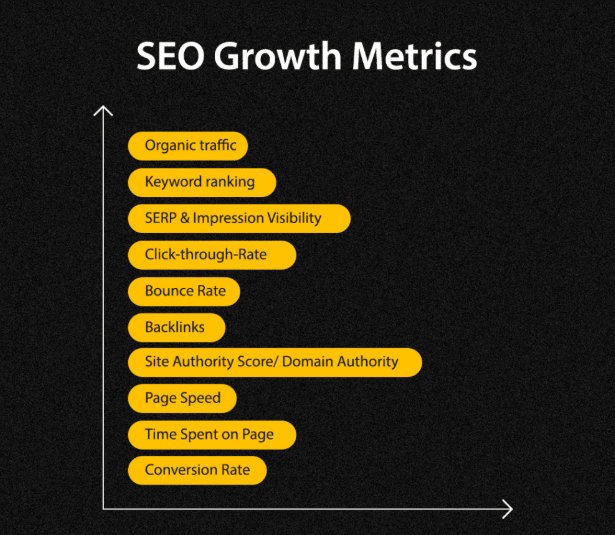
Finally, valuable content creation is an iterative process, not a one-time formula. Regularly reviewing performance data helps you understand what’s actually working for your audience and search engines.
Key metrics to track include:
- Organic traffic and keyword rankings over time
- Engagement metrics like average time on page and bounce/pogo-stick rate
- Conversion metrics relevant to your goals — sign-ups, purchases, downloads
- Backlinks earned, which often indicate genuinely valuable, citation-worthy content
- Search Console data on which queries are driving impressions and clicks, revealing content gaps or opportunities
Use this data to refine your content strategy — doubling down on formats and topics that resonate, and revising or retiring what doesn’t. SEO content creation rewards patience and consistent iteration far more than any single “trick.”
Final Thoughts
Creating valuable content for SEO ultimately comes down to a simple but demanding principle: put the reader first, and let good SEO practices support — rather than replace — genuinely useful content. Deep audience research, intent matching, comprehensive coverage, demonstrated expertise, original insight, strong structure, and ongoing maintenance all work together to build content that both search engines and real people trust. That trust, built consistently over time, is what drives lasting organic visibility.




Leave a Reply