
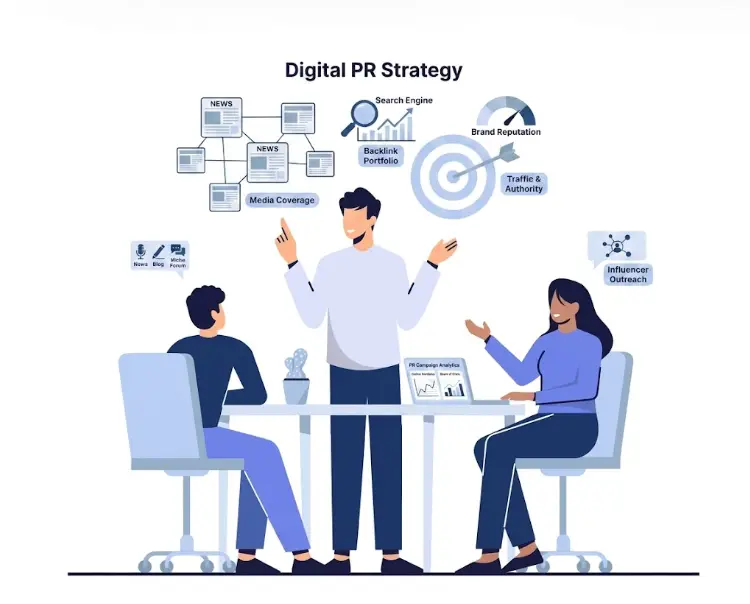
Why Digital PR Drives Organic Traffic
Digital PR drives organic traffic by increasing a brand’s online visibility, credibility, and authority. When businesses earn coverage from reputable publications, industry websites, and influential platforms, they gain valuable backlinks and exposure to new audiences. These high-quality mentions can strengthen search engine trust and improve rankings for relevant keywords. Digital PR also creates opportunities for referral traffic as readers discover and visit the brand through published stories and features. Consistent PR campaigns can expand brand recognition, encourage natural link building, and support long-term SEO performance. By combining compelling content with strategic outreach, digital PR helps businesses attract qualified organic visitors and build sustainable online growth.
Common digital PR tactics include:
Digital PR uses creative strategies to earn media coverage, brand mentions, and authoritative backlinks. Common tactics include data-driven research, such as surveys and industry reports, which provide journalists with valuable stories. Newsjacking connects a brand’s expertise to trending topics and current events. Expert commentary allows businesses to provide insights for journalists and publishers seeking credible sources. Product and brand storytelling promotes launches, announcements, and campaigns through newsworthy angles. Finally, creative campaigns and digital assets, including interactive tools, original visuals, and engaging content, can attract attention and encourage online sharing. Together, these tactics increase visibility, authority, traffic, and SEO opportunities.

5 Key Benefits of Digital PR for SEO, Traffic, and Brand Visibility
1. High-Authority Backlinks Move Rankings
Search engines use backlinks as one of their strongest signals of a page's trustworthiness and authority. Not all backlinks are equal, though — a link from a globally recognized news outlet or respected industry publication carries far more weight than a link from a low-quality directory or an anonymous blog.
2. Referral Traffic Compounds Over Time
Beyond the SEO value, digital PR generates direct referral traffic: readers of the covering publication who click through to learn more. While a single article's traffic spike is often short-lived, the compounding effect of dozens or hundreds of placements over time creates a steady, diversified traffic stream that isn't solely dependent on search rankings.
3. Brand Mentions Reinforce Entity Recognition
Search engines increasingly evaluate brands as "entities" — recognizable, real-world organizations with a presence across the web, not just a domain with a set of pages. Consistent mentions of a brand name across reputable sites, even unlinked ones, help reinforce that entity's association with specific topics, products, or expertise.
4. Increased Branded Search Volume
One of the most underrated outcomes of a strong digital PR campaign is the increase in branded search — people typing a company's name directly into Google after seeing it mentioned in a news article, industry roundup, or social share.
5. Social Proof and Amplification
Media coverage doesn't stay contained to the publishing site. Coverage gets shared on social platforms, picked up in newsletters, and referenced by other content creators, extending its reach well beyond the original article's audience.