
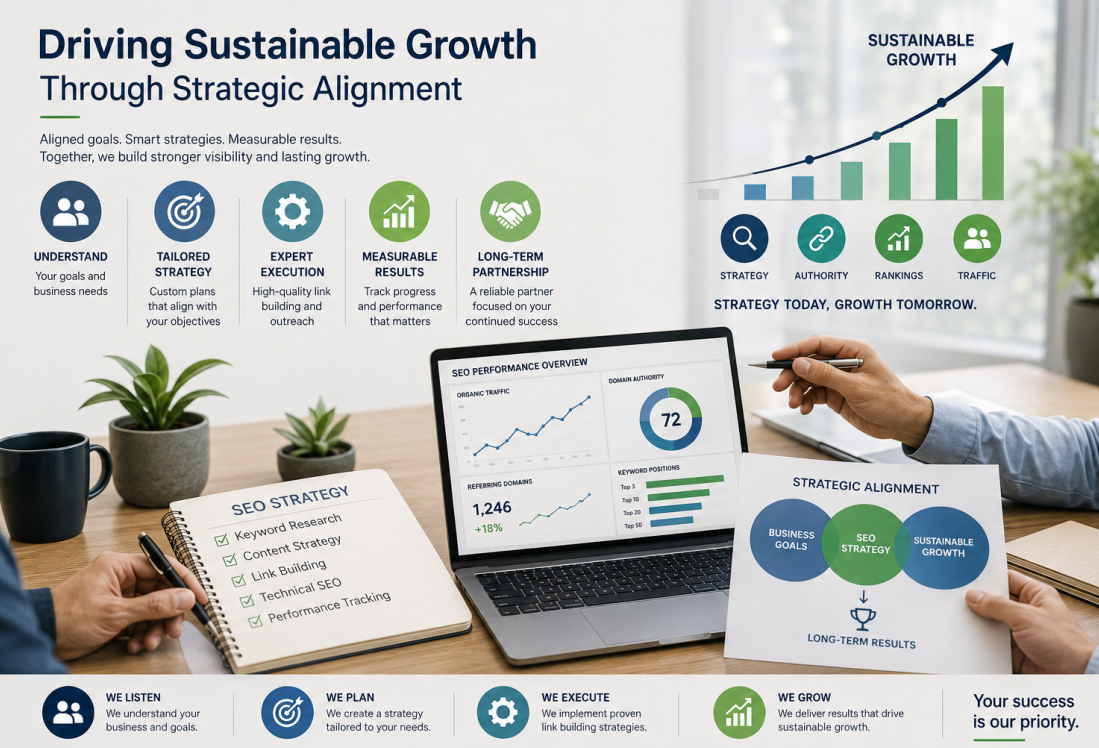
For over two decades, Search Engine Optimization (SEO) was treated primarily as a mechanical discipline. Agencies and consultants focused heavily on isolated technical fixes, keyword density benchmarks, backlink volume counts, and rank-tracking dashboards. While these tactical elements remain foundational, the modern digital ecosystem has evolved. Today, search algorithms prioritize user intent, topical authority, and end-user satisfaction. Simultaneously, business leaders require clear evidence connecting search engine performance to actual revenue, client retention, and brand equity.
This fundamental evolution has given rise to the Client-Centric Approach for SEO. Rather than applying generic, cookie-cutter SEO playbooks, a client-centric model builds every technical strategy, content initiative, and outreach campaign around the client’s specific business model, customer journey, revenue streams, and internal operational capacity.
1. Defining the Paradigms: Traditional SEO vs. Client-Centric SEO
To appreciate the value of a client-centric model, it is crucial to analyze how it differs from traditional SEO practices. Traditional agencies often focus strictly on vanity metrics: ranking on page 1 for high-volume keywords, generating raw organic impressions, or producing fixed volumes of blog content every month regardless of audience relevance.
While rank tracking and impression growth are useful indicators, they do not guarantee commercial success. A campaign that drives 100,000 visitors searching for informational queries might yield zero qualified sales leads if those visitors do not match the target buyer persona. Conversely, a client-centric model starts with the business outcome: understanding profit margins, ideal customer profiles (ICPs), lifetime customer value (LTV), and sales pipeline velocity.
Client-centric SEO views search engines as a medium to reach real human prospects. Consequently, every technical optimization and content asset is engineered to solve genuine user problems while guiding prospective clients smoothly through the conversion funnel.
2. The Discovery Phase: Uncovering Deep Business Intelligence
A client-centric SEO strategy begins long before any technical audit or keyword research tool is launched. It starts with an immersive discovery phase designed to absorb the client’s commercial reality and strategic objectives.
During discovery, successful SEO practitioners investigate key business dimensions:
- Product & Service Profitability: Which offerings deliver the highest margins? Pushing low-margin products simply because they are easier to rank for represents an inefficient use of resources. Focus must be channeled toward high-value growth drivers.
- Sales Cycle Complexity: Is the purchase decision impulse-driven or high-touch B2B requiring multiple stakeholders? B2B enterprise clients demand mid-funnel comparison guides, white papers, and detailed case studies rather than simple transactional copy.
- Technical & Development Capacity: What resources does the client possess internally? Recommending complex JavaScript framework overhauls is counterproductive if the client lacks developer bandwidth. Client-centric SEO adapts recommendations to the client’s actual technical ecosystem.
- Historical Search Performance & Brand Perception: Auditing previous agency engagements, past penalties, and existing brand positioning prevents repeating historical missteps.
3. Developing Tailored, Goal-Aligned SEO Frameworks
Once deep discovery is complete, the strategic roadmap is constructed. Unlike standard, one-size-fits-all SEO checklists, client-centric strategic frameworks prioritize initiatives based on business impact and execution feasibility.
| Strategic Pillar | Traditional SEO Focus | Client-Centric Alignment | Primary Business Metric |
| Keyword Strategy | Search Volume & Low Difficulty | Commercial Intent & Buyer Personas | Qualified Lead Volume / Pipeline |
| Content Strategy | Word Count & Keyword Frequency | Topical Authority & Problem Solving | Session Duration & Conversions |
| Technical SEO | Generic Error Fixing | Core Web Vitals & Conversion Paths | User Experience & Bounce Rate |
| Authority Building | High Metric Backlink Numbers | Niche Relevance & Brand Partnerships | Referral Traffic & Domain Trust |
Strategic Alignment Principle: A client-centric roadmap organizes tasks into a matrix of High Business Value vs. Technical Ease. Immediate quick wins—such as optimizing high-intent pages sitting on Page 2—are prioritized to build momentum and prove early ROI to stakeholders.
4. Communication & Transparency: Bridging the Agency-Client Gap
Miscommunication and opaque reporting are primary reasons organizations terminate SEO partnerships. Traditional agencies frequently flood clients with 50-page automated PDF reports filled with technical jargon, raw crawl logs, and arbitrary metrics that client stakeholders cannot interpret.
A client-centric communication framework tailors reporting and updates to the specific audience receiving them:
A. Executive Level (C-Suite)
Executives require clarity and brevity. Reports created for CEOs and CFOs focus strictly on bottom-line business metrics: organic revenue contribution, cost per acquisition (CPA) compared to paid channels, customer pipeline growth, and year-over-year ROI.
B. Marketing Managers & Strategy Leads
Internal marketing teams need actionable insights. Reports highlight top-performing content hubs, conversion rate optimization (CRO) opportunities, keyword cluster coverage, and competitive market share shifts.
C. Web Development & IT Teams
Developers need technical clarity without fluff. Instead of handing developers a raw audit export, client-centric SEO managers translate findings into prioritized technical tickets (e.g., JIRA or Trello cards) complete with exact URL lists, code snippets, and expected outcomes.
5. Measuring What Matters: Commercial KPI Integration
To establish long-term trust, SEO performance measurement must be tied directly to commercial key performance indicators (KPIs). Client-centric agencies integrate analytics platforms (such as Google Analytics 4, HubSpot, Salesforce, or custom warehouse tools) to track prospects from first organic touchpoint to final deal closing.
Essential business-centric KPIs include:
- Organic Assisted Conversions: Understanding how organic search content introduces prospects who later convert via direct, email, or retargeting channels.
- Customer Acquisition Cost (CAC) Reduction: Tracking how growing organic authority lowers reliance on paid acquisition channels over time.
- Conversion Rate by Search Intent: Optimizing landing pages to ensure that commercial-intent traffic converts at peak performance rates.
- Pipeline Value Generated: In B2B environments, calculating the total dollar value of sales opportunities created via organic landing pages.
6. Execution Lifecycle: Continuous Client-Centric Feedback Loop
Search engines and competitive market landscapes are dynamic. A strategy defined today will require refinement six months down the road. The client-centric lifecycle operates on a continuous loop of agile execution and feedback:
- Agile Sprint Execution: Breaking large strategic goals into 30-day or 60-day sprint cycles. Executing high-priority technical fixes and content creation in manageable chunks allows swift adaptation to algorithm updates or shifting client priorities.
- Commercial Feedback Integration: Reviewing lead quality with client sales teams monthly. Pruning or refreshing content that generates unqualified traffic while doubling down on keyword clusters that generate high-value deals.
7. Summary & Implementation Best Practices
Adopting a client-centric approach for SEO shifts the entire focus of search engine marketing from technical obsession to business empowerment. By grounding strategies in client business models, aligning content with real audience intent, maintaining transparent communication, and measuring success through commercial revenue metrics, organizations unlock sustainable, long-term search engine growth that directly funds business expansion.



Leave a Reply