

Link building remains one of the most misunderstood pillars of search engine optimization. For years, marketers treated it as a numbers game — the more backlinks, the better. But Google’s algorithms have grown far more sophisticated, and the businesses that win today aren’t the ones amassing the largest link portfolios. They’re the ones building links that match their industry, audience, and growth stage. A one-size-fits-all link building strategy simply doesn’t hold up anymore. What works for a SaaS startup trying to earn its first hundred backlinks looks nothing like what works for an established e-commerce brand competing in a saturated niche. This article breaks down why tailored link building strategies matter, and how different types of businesses can approach the practice in ways that actually move the needle.
Why Generic Link Building Fails
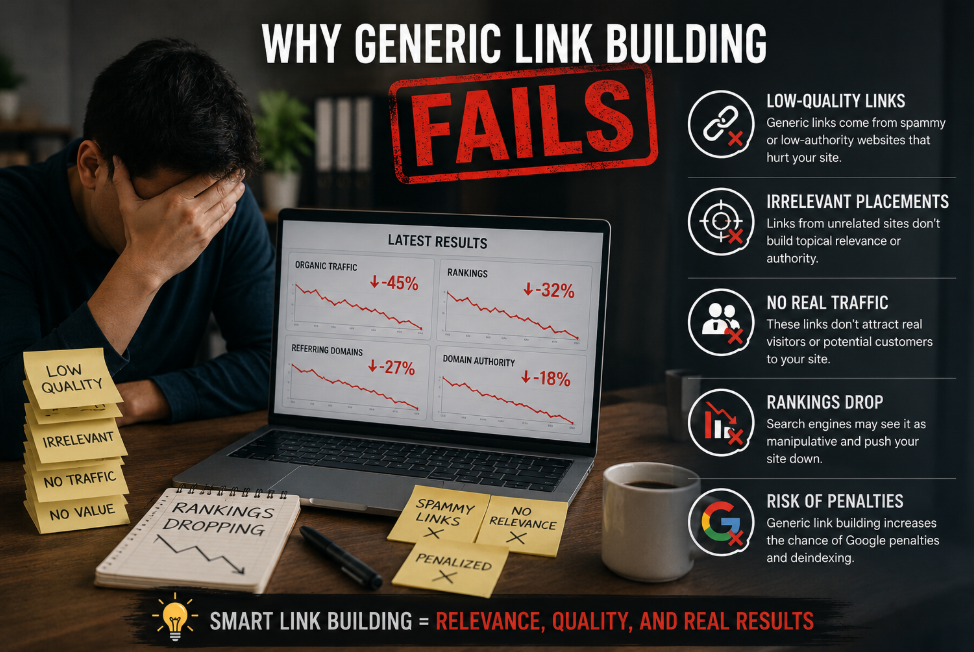
Search engines evaluate backlinks not just by quantity but by relevance, authority, and context. A link from a well-regarded industry publication carries more weight than a dozen links from unrelated directories. This is why blanket strategies — buying link packages, submitting to hundreds of generic directories, or running mass guest post campaigns without regard to topical fit — tend to underperform or, worse, trigger algorithmic penalties.
Generic approaches also ignore something crucial: every business has a different competitive landscape, a different audience, and different assets worth linking to. A local plumbing company doesn’t need links from national tech blogs. A B2B software company doesn’t need backlinks from lifestyle websites. Building links without considering the specific dynamics of an industry wastes time and can actively harm search visibility by creating a backlink profile that looks unnatural or misaligned with the site’s actual content.
Tailoring a link building strategy means starting with the business itself — its goals, its audience, its existing content strengths, and its competitive set — rather than starting with a generic checklist of tactics.
Understanding Your Starting Point

Before pursuing any new links, it’s worth conducting an honest audit of where a site currently stands. This includes reviewing the existing backlink profile for toxic or spammy links that could be dragging down performance, understanding which competitors are outranking the site and why, and identifying what kind of content or resources the business already has that could realistically attract links.
This audit process often reveals gaps. A company might discover it has strong internal expertise but no content assets — like original research, tools, or guides — that would give other sites a reason to link to it. Others might find that their backlink profile is heavily concentrated in low-quality directories, signaling a need to pivot toward higher-authority, more relevant sources. Whatever the finding, this diagnostic stage should inform every subsequent decision about strategy.
Tailored Strategies by Business Type
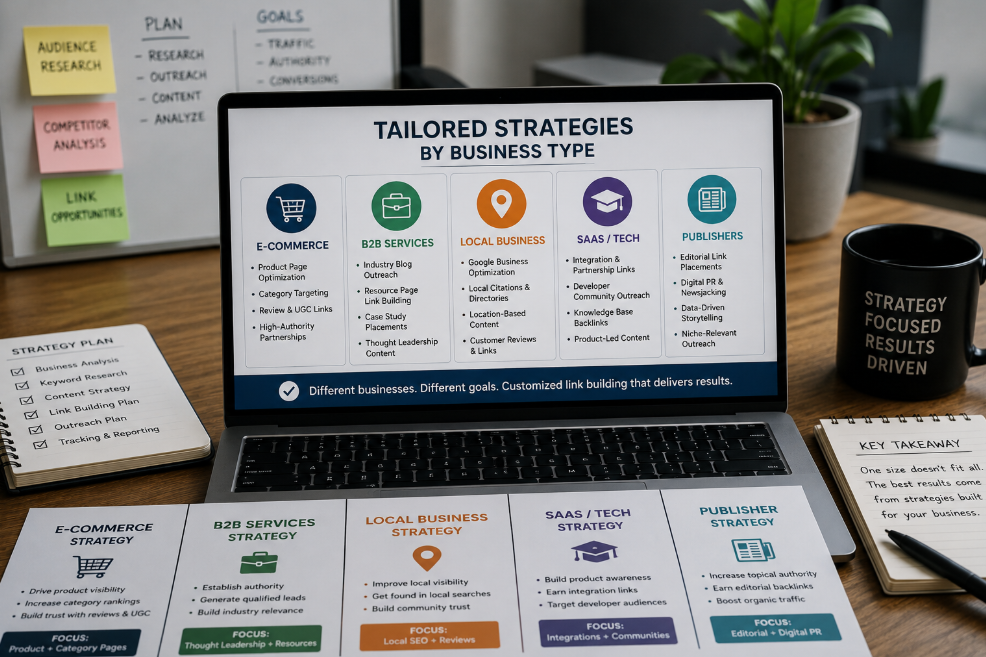
E-Commerce Businesses
E-commerce sites face a unique challenge: product and category pages are difficult to earn links to naturally, since they’re inherently promotional. The more effective approach is building linkable assets around the products rather than the products themselves. This might include buying guides, comparison content, sustainability or sourcing stories, or original data drawn from sales trends and customer behavior.
Digital PR tends to work particularly well for e-commerce brands. Pitching journalists and bloggers with seasonal trend reports, survey data, or unique angles tied to a product category can generate high-authority links back to a resource hub, which can then internally link to relevant product pages. Partnerships with micro-influencers and niche bloggers who genuinely use the product also tend to produce more durable, natural-looking links than transactional sponsorship arrangements.
Affiliate and resource page link building is another strong avenue — many niches have curated “best of” or resource pages that e-commerce brands can be added to, provided the product genuinely fits the context.
B2B and SaaS Companies

B2B and SaaS companies typically benefit most from thought leadership and data-driven content. Because the buyer journey in B2B is longer and more research-intensive, prospects and industry sites are often looking for authoritative, well-researched material — benchmark reports, original surveys, whitepapers, and in-depth guides. These formats are inherently link-worthy because they save other content creators the work of gathering original data themselves.
Guest contributions to respected industry publications, when done selectively and written by genuine subject matter experts, remain effective for B2B link building. The key differentiator from outdated guest posting tactics is selectivity: publishing on five highly relevant, respected sites produces more value than fifty low-quality placements.
Strategic partnerships also play a role. Co-marketing with complementary (non-competing) software companies, contributing to integration or partner directories, and being featured in “best tools for X” roundup articles are all natural fits for SaaS businesses, since these placements tend to be highly relevant to the audience already searching for that category of product.
Local and Service-Based Businesses
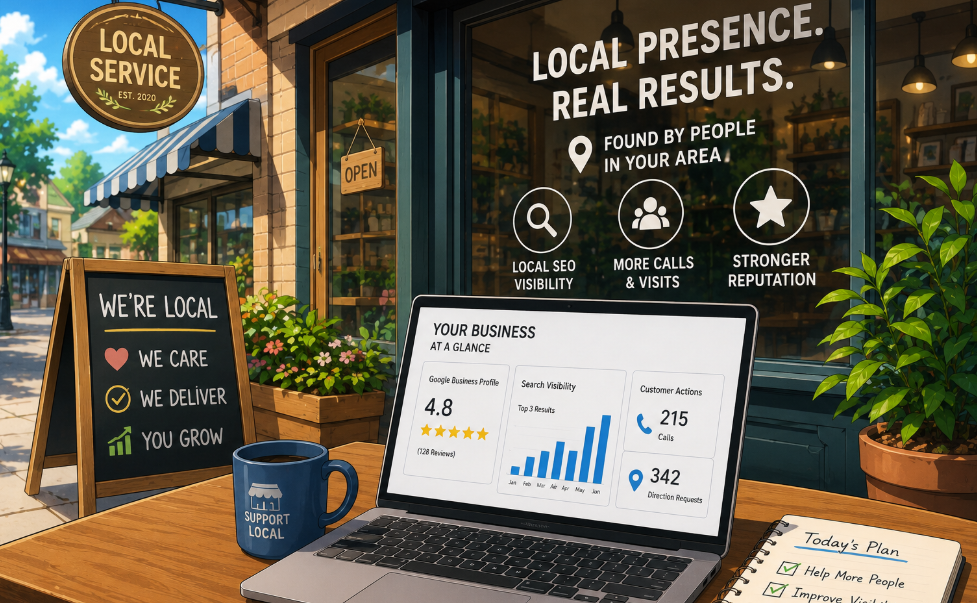
For local businesses — contractors, medical practices, restaurants, law firms — link building looks quite different. Relevance here is often geographic rather than purely topical. Building relationships with local news outlets, chambers of commerce, community organizations, and local bloggers can produce links that are both authoritative and locally relevant, which matters for local search visibility.
Sponsorships of community events, youth sports teams, or local charities frequently come with a link back from the organization’s website. Getting listed accurately and consistently across local business directories, while not glamorous, still supports both link equity and local pack rankings. Building relationships with other local businesses for cross-promotion — a caterer linking to a florist they frequently work with for weddings, for example — can also produce natural, contextually relevant links.
Local businesses should resist the temptation to pursue high-authority national links that have no topical or geographic connection to their business. A single relevant local link often outperforms several unrelated high-authority ones in terms of actual ranking impact for local queries.
Content Publishers and Media Sites

For publishers and media sites, the primary link building lever is usually original journalism and research. Breaking a story, publishing exclusive data, or producing investigative content naturally attracts citations from other outlets. Because these sites already produce large volumes of content, focusing on a smaller number of genuinely link-worthy “cornerstone” pieces — rather than hoping every article earns links — tends to be more efficient.
Publishers also benefit from strong internal linking practices and from building relationships with other publishers and freelance journalists who might reference their work in future stories. Being responsive to journalist queries through services that connect sources with reporters can be a reliable, ongoing source of high-authority coverage links.
Startups and Early-Stage Businesses

Startups face a particular problem: limited brand recognition and, often, limited content history to draw from. Early-stage link building usually needs to lean heavily on founder-led visibility — getting the founder or leadership team quoted in press coverage, interviewed on podcasts, or featured in “startups to watch” style articles.
Building a genuinely useful free tool, calculator, or template related to the company’s niche can also generate links disproportionate to the size of the company, since these resources are often shared and cited regardless of the site’s overall authority. Startups should also prioritize getting listed in relevant startup directories, funding announcement coverage, and product launch platforms, all of which are realistic, achievable link sources even before a company has significant domain authority.
Common Threads Across Tailored Strategies
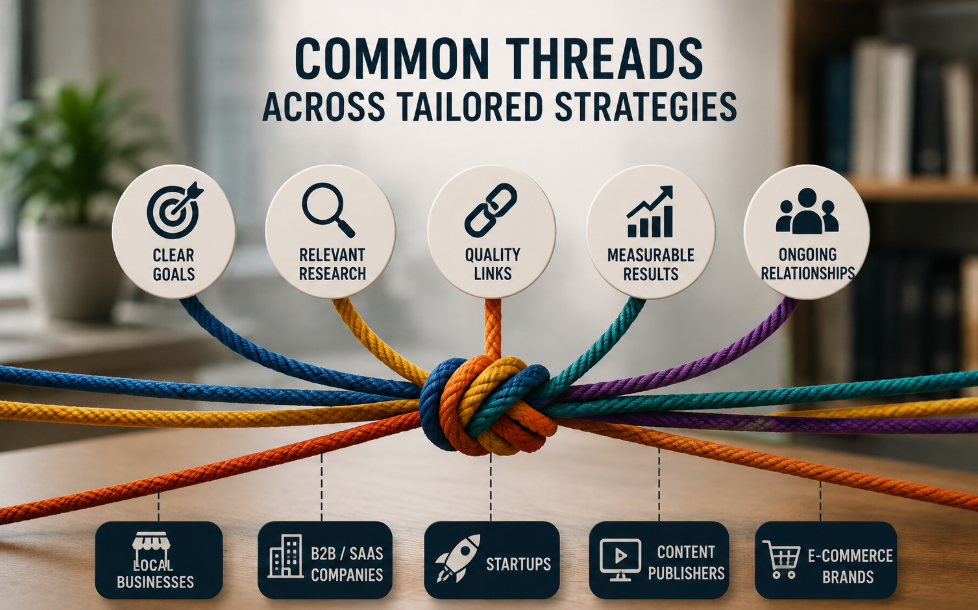
Despite the differences across industries, a few principles consistently separate effective tailored strategies from generic ones.
Relevance over raw authority. A link from a moderately authoritative site that’s topically and contextually relevant will typically do more for rankings and referral value than a link from an unrelated high-authority domain.
Building something worth linking to. Nearly every successful tailored strategy starts with an asset — research, a tool, a guide, a story — that gives other sites a genuine reason to link, rather than starting with outreach and hoping something sticks.
Sustainable pacing. Link profiles that grow at a natural, gradual pace tend to hold up better over time than those built through sudden bursts of activity, which can look manipulative to search engines.
Diversification of link types. Editorial mentions, resource page listings, partnership links, local citations, and digital PR coverage each serve a different purpose. Relying too heavily on one tactic, even a good one, creates a less resilient backlink profile.
Ongoing relationship building. The most durable link building strategies aren’t transactional. They’re built on genuine relationships with journalists, bloggers, industry peers, and local organizations — relationships that continue to generate links and mentions well beyond a single campaign.
Measuring What Matters

Tailored strategies also require tailored measurement. Raw link count is a poor indicator of success on its own. More meaningful metrics include the relevance and authority of referring domains, the amount of referral traffic those links actually generate, improvements in rankings for target keywords tied to linked pages, and the diversity of the link profile across link types and sources.
Businesses should also track how their backlink profile compares to direct competitors — not to copy their tactics wholesale, but to understand which types of link sources are working within their specific industry and adjust accordingly.
Conclusion
Link building hasn’t become less important — it’s become more nuanced. The businesses that succeed with it today are the ones that resist generic playbooks and instead build strategies rooted in their industry’s realities: what their audience trusts, what their competitors are doing, and what kind of content or relationships genuinely earn links in their space. Whether that means digital PR for an e-commerce brand, original research for a SaaS company, or community sponsorships for a local service business, the underlying lesson is the same. Effective link building starts with understanding the business itself, not with a checklist of tactics borrowed from an unrelated industry.




Leave a Reply