
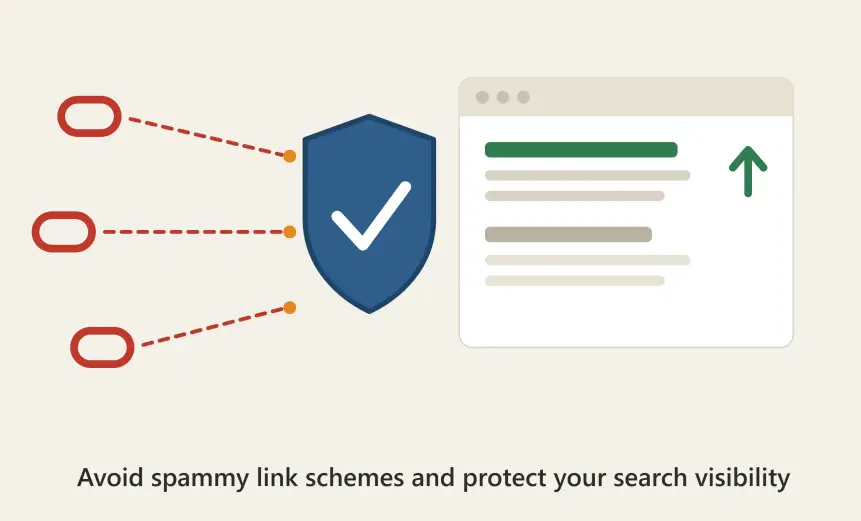
In the highly competitive arena of Search Engine Optimization (SEO), backlinks remain one of the primary currency systems governing organic search engine visibility. Search engines like Google treat incoming hyperlinks as votes of confidence. When a high-authority, topically relevant website links to your domain, it sends a clear signal to search algorithms that your content is trustworthy, informative, and authoritative.
However, the immense ranking power of backlinks has historically created a thriving marketplace for shortcuts. Over the years, website owners, digital marketers, and agency professionals have attempted to game algorithm scoring systems using automated link generators, paid placement networks, aggressive anchor-text manipulation, and link exchange circles.
These shortcut tactics—collectively categorized by search engines as link schemes or link spam—violate Search Essentials guidelines. Modern machine learning systems, such as Google’s SpamBrain AI, are specifically architected to detect, neutralize, and penalize artificial link profiles. Engaging in manipulative link-building strategies risks severe organic visibility drops, manual action penalties, and complete de-indexing from search result pages.
To build an enduring web presence, businesses and SEO practitioners must thoroughly understand what constitutes a link scheme, how search engines identify unnatural patterns, and how to execute sustainable organic backlink acquisition strategies.
1. What Is a Link Scheme? Understanding Google’s Stance
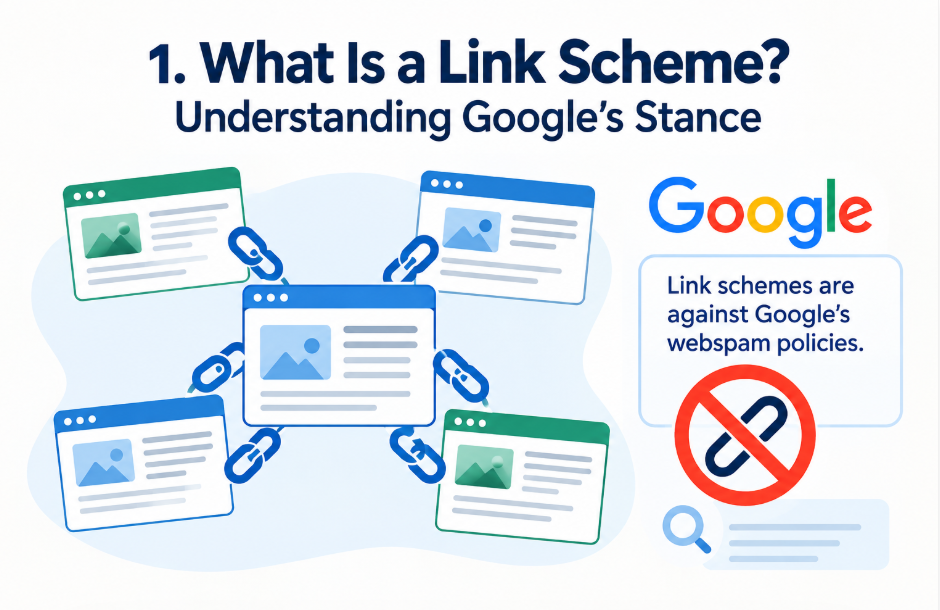
A link scheme refers to any action intended to manipulate outbound links from a site or inbound links to a site in order to artifically boost search engine rank positions (SERPs). At its core, search engines require backlinks to represent genuine, editorial endorsements made voluntarily by content creators.
Google’s Spam Policies explicitly state that any link intended to manipulate PageRank or a site’s ranking in search results may be considered part of a link scheme and a violation of Google’s Search Essentials.
When search engines analyze links, they evaluate the context, editorial intent, anchor text diversity, and structural relationships between domains. If a link exists purely because money changed hands, a service was bartered, or a software script automatically injected code into a database, it lacks genuine editorial intent. Search engines view this artificial creation as an attempt to deceive search algorithms. Read more about avoiding spammy link schemes!
2. Common Types of Spammy Link Schemes to Avoid
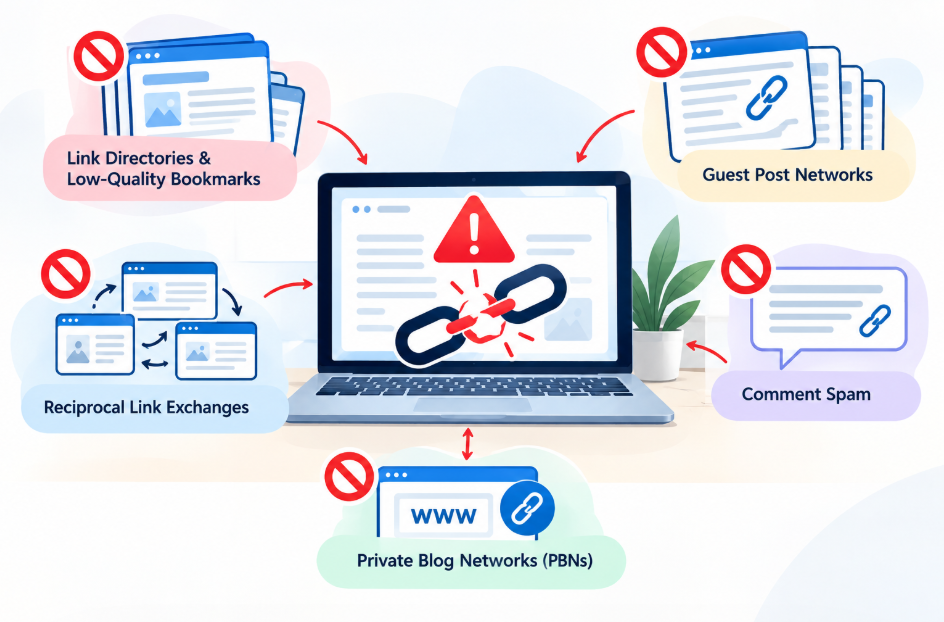
Understanding the distinct forms of manipulative link building is essential for keeping your domain compliant and avoiding accidental penalties. Below are the primary link scheme models flagging automated risk filters today.
A. Paid Links for SEO Benefit
Exchanging money, goods, services, or free products for links that pass ranking power (PageRank) is one of the most common and direct violations of search engine guidelines. This includes:
- Paying a blog author or site owner directly to insert a dofollow link into an existing article.
- Sending free merchandise or product samples to influencers in exchange for articles containing passing links.
- Purchasing advertorials or sponsored content without implementing qualification attributes such as
rel="sponsored"orrel="nofollow".
If an exchange of monetary value occurs, the resulting link must be properly tagged so search engines know it is a paid endorsement rather than an unbiased editorial reference.
B. Excessive Reciprocal Link Exchanges (“Link Swaps”)
Reciprocal linking occurs when Site A links to Site B, and Site B links back to Site A. While natural, cross-referencing between related industry sites occurs organically, excessive or systematic reciprocal link exchanges (“I link to you if you link to me”) created strictly for SEO boost are flagged as manipulative. Advanced algorithms detect mutual cross-linking patterns across large databases and quickly discount or penalize the participating domains.
C. Private Blog Networks (PBNs)
A Private Blog Network is a collection of expired or high-authority domains registered by a single owner or group to pass link equity to a central “money” site. PBN managers re-inflate old domains with generic content and inject backlinks aimed at target keywords.
While PBNs may show short-term gains, search engines aggressively hunt network footprints—such as shared IP subnets, identical WHOIS data, duplicate hosting accounts, identical CMS setups, and interlinked cross-domain patterns. When a PBN is uncovered, every website receiving links from that network suffers catastrophic ranking collapses.
D. Automated Link Building Software
Using automated programs, bots, or scripts to generate thousands of links across web forums, guestbooks, profile pages, wiki pages, and blog comment sections is a classic black-hat SEO tactic. These software solutions blast low-quality, spun content across target sites. Modern spam algorithms spot automated submissions instantly, resulting in immediate domain flagging and algorithmic suppression.
E. Low-Quality Guest Posting and Press Release Distribution
Guest blogging was once a premier white-hat link-building methodology. However, it quickly devolved into a scale-driven link scheme when agencies began creating low-quality, thin articles distributed indiscriminately across low-authority blogs.
Similarly, submitting press releases containing exact-match, optimized anchor-text links across automated wire distribution channels is treated as link spam. If you publish guest posts or press releases, outbound links should utilize non-optimized anchor text, brand references, or rel="nofollow" attributes.
3. The Consequences of Engaging in Link Schemes
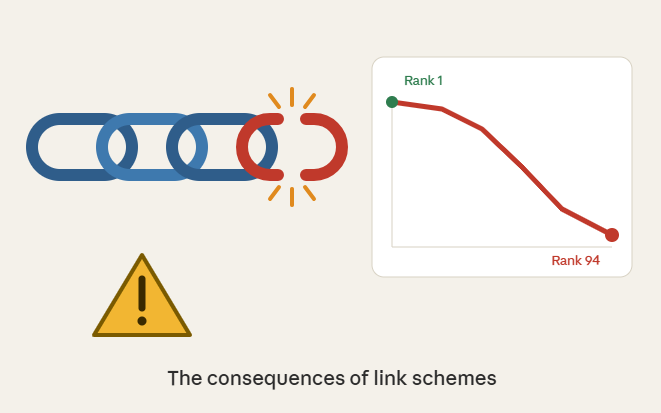
Falling for the promise of “cheap, fast rankings” via shady link packages carries severe operational risks. Search engines deploy both automated algorithmic systems and human review teams to penalize non-compliant sites.
Algorithmic Nullification & Demotions
Modern spam filters, including Google’s SpamBrain, continuously crawl the web to detect unnatural linking patterns. Instead of notifying site owners, algorithmic updates (such as Google Link Spam Updates) systematically neutralize the value of detected spammy links.
If your website’s backlink portfolio is built predominantly on spammy links, neutralizing those links causes your organic traffic and keyword rankings to plummet overnight as the artificial foundation vanishes.
Manual Actions
When a human webspam reviewer inspects your site’s link profile and determines you have violated search policies, they issue a Manual Action.
A manual action notification appears directly in your Google Search Console account. The consequences range from demoting specific landing pages to removing your entire website domain from Google Search results completely. Resolving a manual action requires extensive backlink auditing, painstaking outreach to remove toxic links, submitting disavow files, and waiting for manual reconsideration review approval.
Read also: The Ultimate Guide to Comprehensive Services for Link Building: Strategies, Execution, and Growth
4. How to Audit Your Backlink Profile and Neutralize Risks
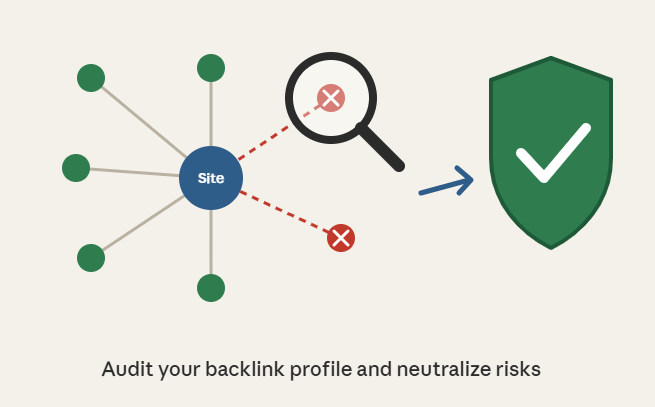
Proactively monitoring your backlink profile helps protect your website from negative SEO attacks, legacy bad practices, or rogue agency activities. Establishing a routine link audit process keeps your domain healthy.
Step 1: Export Backlink Data
Use webmaster tools such as Google Search Console, alongside reputable SEO crawling platforms like Ahrefs, Semrush, or Moz, to export a complete list of external referring domains and inbound backlinks pointing to your domain.
Step 2: Identify Toxic Backlink Signals
Analyze your link inventory for common red flags, including:
- Unusually high volumes of exact-match anchor text focused on high-commercial keywords (e.g., “cheap car insurance online”).
- Backlinks originating from sites completely unrelated to your niche or geographical audience.
- Thousands of site-wide footer or sidebar links from foreign-language domain farms.
- Links coming from known adult, gambling, or low-quality directory websites.
Step 3: Attempt Manual Removal
For severe or manual penalties, reach out directly to domain owners or webmasters hosting the spammy links and politely request link removal. Document every outreach attempt, email address, and timestamp as evidence for your reconsideration request.
Step 4: Utilize the Google Disavow Tool
If contacting site owners is unsuccessful, compile a list of toxic domains or URLs into a formatted text file (.txt) and upload it to the Google Disavow Tool. Disavowing instructs search engines to ignore those specific inbound links when assessing your site’s rank algorithmically.
Important: Use the disavow tool with caution. Disavowing genuine, helpful links by mistake can unintentionally drop your search visibility. Limit disavowal strictly to verified spam or artificial networks.
5. Sustainable Strategies for Natural, White-Hat Link Building
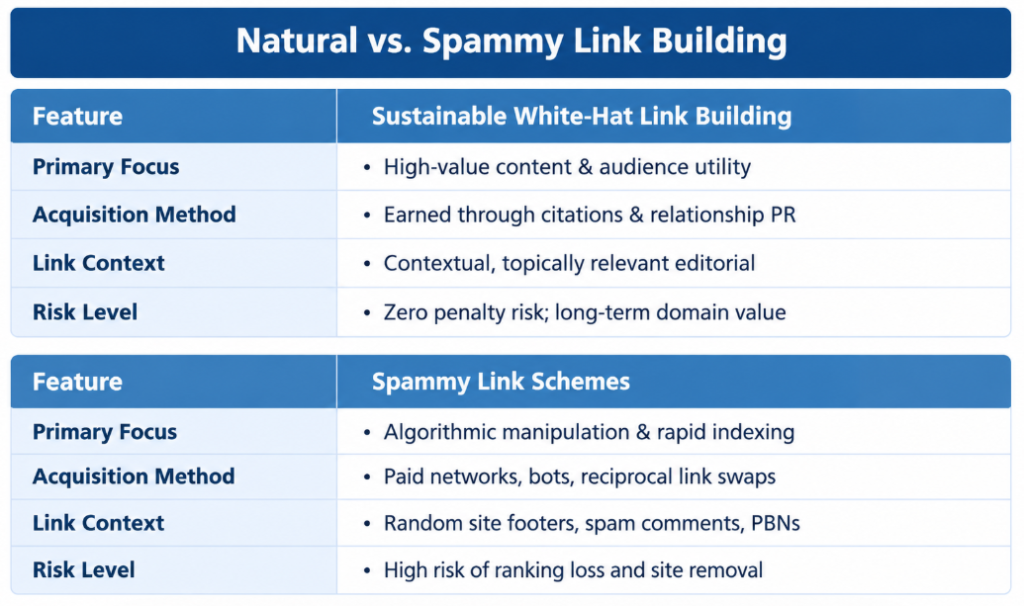
Avoiding link schemes does not mean abandoning link acquisition altogether. The key is shifting focus from manipulating search engines to earning natural endorsements through high-value content, original research, and genuine industry relationship-building.
A. Publish Original Data, Research, and Case Studies
Industry journalists, bloggers, and content creators are constantly looking for verifiable statistics and data to support their writing. Conducting original surveys, analyzing internal data trends, or publishing comprehensive case studies creates an automatic “link magnet.” Other sites naturally cite your work as the primary source.
B. Create Comprehensive, Definitive Resources
Produce long-form, highly informative content that thoroughly resolves user search intent. Ultimate guides, comprehensive tutorials, free tools, and interactive visual aids naturally attract editorial links because they serve as helpful reference materials across social media and web communities.
C. Digital PR and Thought Leadership
Engage in active media outreach by offering expert insights to journalists via platforms like Connectively (formerly HARO), Qwoted, or industry forums. Providing authoritative commentary for news outlets earns authoritative, high-tier editorial media backlinks that comply with search guidelines.
D. Fix Broken Links in Your Niche
Identify broken external links on authoritative blogs within your industry using SEO site audit tools. Contact the content owner, inform them of the dead link, and suggest your relevant, high-quality article as a working replacement. This approach provides value to the site owner while earning you a legitimate backlink.
Conclusion
Building a powerful, authoritative website demands patience, strategy, and unwavering commitment to quality. While spammy link schemes may offer tempting shortcuts, their temporary gains are consistently overshadowed by algorithm penalties, lost revenue, and brand damage.
By focusing on user-centric content, maintaining an ethical SEO strategy, and earning links naturally through genuine value creation, your site can build an organic search foundation that withstands algorithm updates and drives long-term business growth.



Leave a Reply