
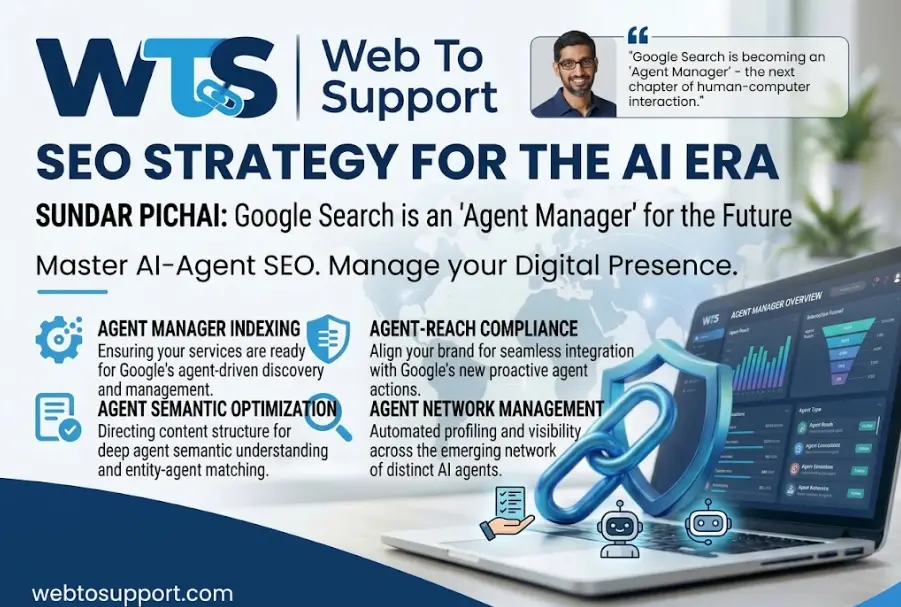
For more than two decades, Google Search has been a box, a blinking cursor, and a page of ranked results. Sundar Pichai’s recent comments suggest that picture is about to change. He describes a future in which search is no longer a single query that returns links, but a coordinating layer that sends out agents, finishes tasks, and brings back outcomes. In that future, Search is absorbed into a broader agentic layer that runs across Google’s products.
From Query Box to Agent Manager
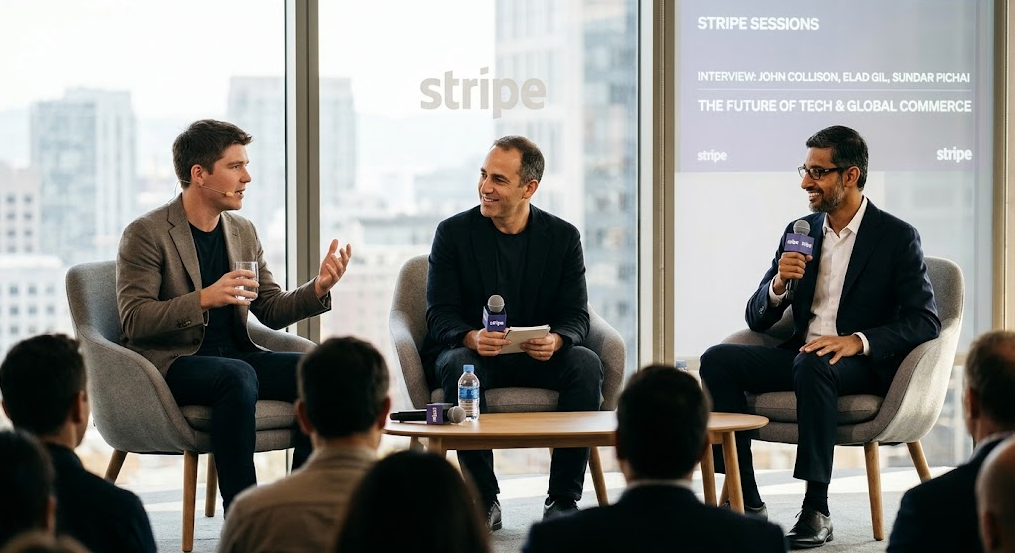
In an interview with Stripe’s John Collison and Elad Gil, Pichai was asked directly whether agents would replace Search. He answered that, looking ahead, many queries that are simply about finding information will become agentic within Search, and that Search will change so it works like an agent manager. The wording matters. He did not say Search disappears. He said it is restructured around a different job: delegating work and coordinating the results.
Coverage of the interview describes this as a shift away from a single-query box toward a system that orchestrates multiple AI agents. The idea is that the user states a goal and Search decides which specialized agents to involve. A request like “find me a flight, check my calendar, and book something under budget” is not really a search at all. It is a small project, and the manager model treats it that way.
Industry observers read this as a move from link-based results toward task completion and multi-step workflows. That is a significant redefinition. Success has traditionally been measured by whether you found the right page. In an agentic model, success is whether the thing you wanted got done.
The Agentic Layer Behind the Scenes

The “absorbed into an agentic layer” framing becomes clearer when you look at how Google presented its strategy at I/O 2026. Pichai framed the keynote around what Google calls the agentic Gemini era, spanning products, conversational AI, infrastructure, models, and agents, rather than around one isolated model release.
The connective tissue is a platform called Antigravity. Google DeepMind’s Logan Kilpatrick said this agentic layer, powered by the Antigravity agent harness, is a new through line connecting Google’s products, with Antigravity powering agent features in Search, the Gemini app, Cloud, and AI Studio. He contrasted this with the previous era, where the language model itself was the common thread that got baked into every product.
Another analysis describes the strategic intent plainly. Google is stitching together models, tools, sandboxes, browsers, Search, Workspace, Android, Chrome, and Cloud into one agentic operating layer, so that the browser, search box, IDE, phone, and productivity suite share a common agent layer. The old boundary was the app. The new boundary is the agent that moves between apps.
Under this model, Search stops being a destination and becomes a capability. It is one of several surfaces through which a shared set of agents operates. That is what “absorbed” means in practice: Search keeps its function but loses its separateness.
Google’s Own Teams Are Already Using It
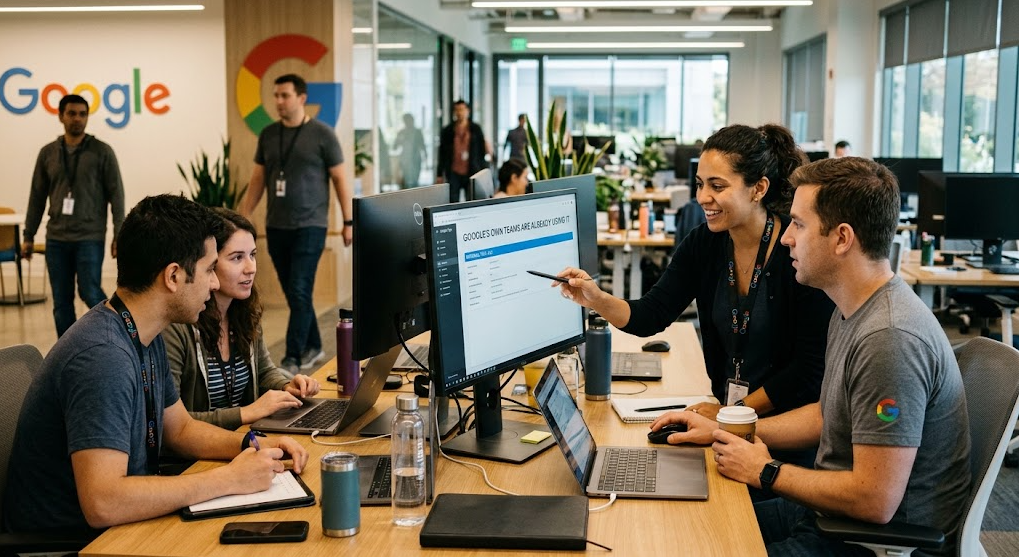
Pichai’s comments were not purely forward-looking. He indicated the shift is already happening inside the company. He said the Google Search team had only just started using Antigravity, rolling it out to them the previous week. The people building Search are adopting the same agentic tooling that is meant to reshape what Search becomes, which suggests the transition is as much an internal engineering change as a product announcement.
He also spoke about the broader agentic trajectory. When asked whether Google would build something like OpenClaw-style agentic systems, he said he thought that kind of system was the future. A summary of the interview notes his excitement about such systems bringing persistent, secure agent workflows to mainstream users, and his prediction that 2027 will be a major inflection point for AI improvement.
The common thread is persistence. A traditional search ends when you click a result. An agent can keep working after you close the tab, monitoring a price, finishing a multi-step booking, or compiling research overnight. Persistence is what makes the “manager” metaphor fit: managers oversee ongoing work, not one-off lookups.
Why Google Wants This
There are several reasons Google would lean into this change rather than defend the classic results page.
Competition. AI assistants that answer questions and complete tasks directly have changed what users expect from a search engine. If a competitor can book the table, draft the email, and summarize the reviews in one conversation, a page of ten blue links begins to feel slow. Google would rather redefine its own product than watch others do it.
Cannibalization fears have not materialized yet. One of the biggest worries when AI answers arrived was that they would hurt Search. Kilpatrick argued the opposite has happened: although many assumed AI answering questions would be negative-sum for search, it has turned out to be incredibly positive-sum. If that holds, moving further toward agents looks less like a gamble and more like a continuation of a trend that has worked.
Speed and product discipline. Pichai has described transformers as innovations built to solve specific product needs, and has highlighted speed as a competitive lever, using latency budgets to protect the product experience. That engineering-first mindset suggests Google intends to ship agentic features only where they genuinely improve the experience, and to hold them to the same performance standards as classic search.
Infrastructure advantage. Google controls an unusual stack: custom chips, frontier models, a browser, a mobile operating system, an email and productivity suite, and a search index. An agentic layer is the natural way to make those pieces work together, and few competitors can match that breadth.
What Changes for Users
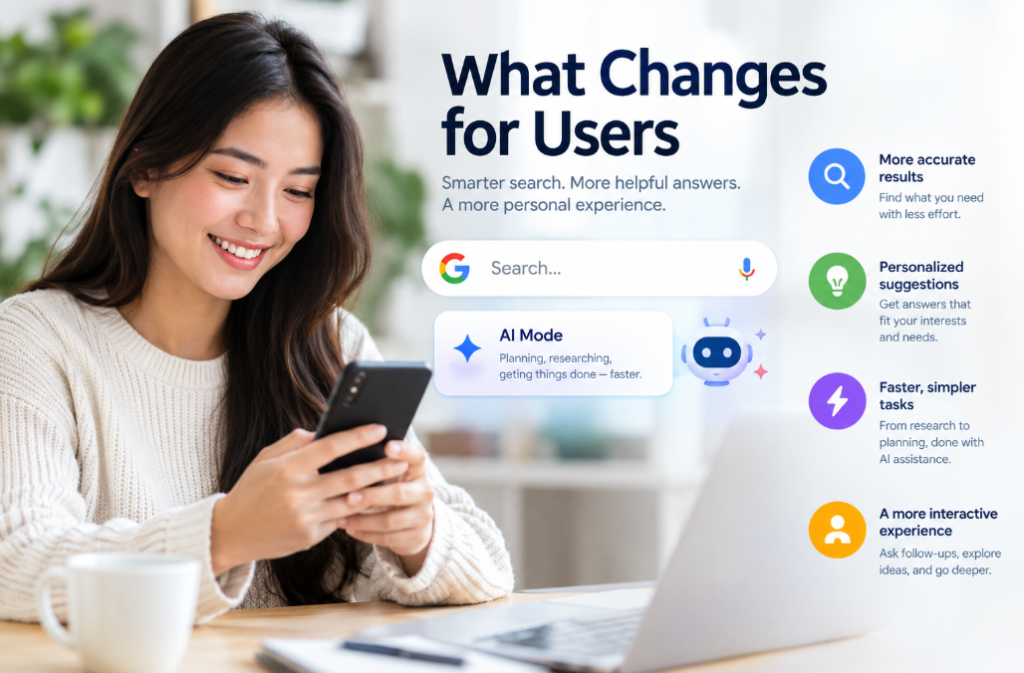
For everyday users, the most visible change is a shift from finding to doing. Information-seeking queries, the “what is” and “how do I” questions, will increasingly be answered or acted upon by agents rather than returned as lists. More complex goals, like planning a trip or comparing products across many sources, could be handled as delegated projects.
This has real benefits. Fewer clicks, less tab-juggling, and less time spent stitching together information from different sites are all genuine improvements. For people with limited time or technical skill, an agent that simply completes the task could be a meaningful upgrade.
But it also changes the relationship between a person and the information they receive. When you read a list of results, you see several sources and make your own judgment. When an agent returns a finished answer, much of that judgment is delegated. Pichai acknowledged the tension in his remarks. The interviewer raised the concern about placing so much trust in agents as the arbiter of our information diet, and Pichai pointed to the trusted sources people build up through Search and YouTube, saying that agents should be in the job of connecting users to the value of that ecosystem.
He also said agents will add a layer of abstraction in some cases, but that he does not think the desire to explore the web or to connect with creators goes away, and that trust is built through value, safety, transparency, user control, and feedback. These are the principles Google says will govern the transition, and they will be tested as agents take on more responsibility.
What Changes for Publishers and Creators
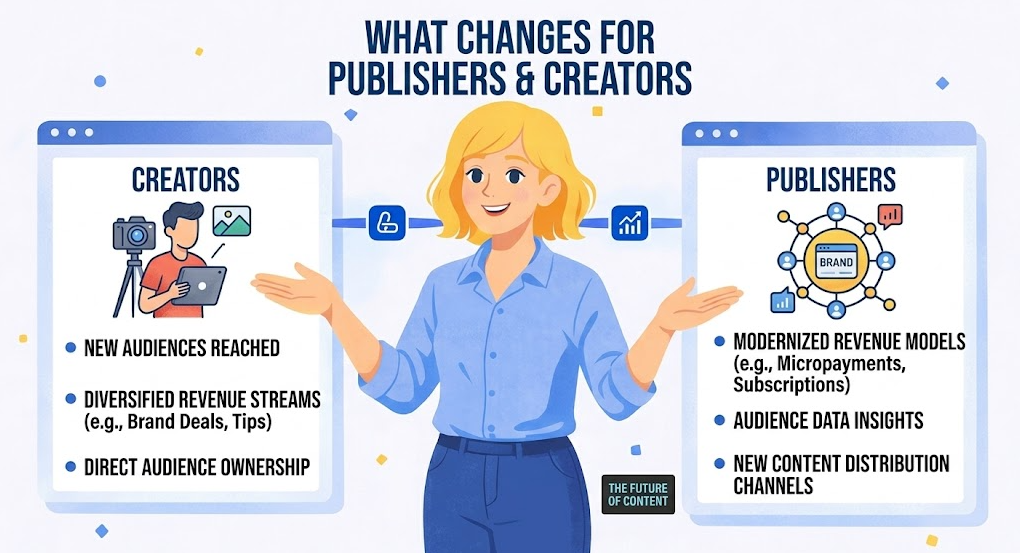
For publishers, an agent-managed Search is both an opportunity and a threat. The opportunity is that agents may send more qualified, higher-intent visitors, people who have already narrowed their needs. The threat is that when an agent completes a task or summarizes a topic, the user may never visit the source at all.
The concern is already visible across the search industry. Recent industry news has covered Google testing an AI-focused home page and rolling out AI-generated images directly within AI Overviews, which prompted immediate criticism from content creators worried about being replaced. Each step that makes Google’s own interface more complete reduces the need to leave it.
Pichai’s stated position is that the ecosystem remains central, and that agents should be built to connect users with it rather than bypass it. Whether that proves true will depend on product decisions that are not yet visible: how sources are credited, how traffic is shared, and whether agents prioritize links or finished answers.
For SEO professionals, the implications are practical. Optimizing for a ranked list is different from optimizing to be chosen by an agent. Structured data, clear authority signals, reliable product and pricing information, and content that is genuinely useful to a task are likely to matter more. Some in the industry are already experimenting with building tools using agentic platforms, a sign that the discipline itself is being reshaped.
Developer and Business Implications
An “agent manager” model also changes what developers must build. Making search an agent manager changes developer and product requirements: teams need workflow managers, agent safety and guardrails, compositional prompts, state handling, and efficient model routing. In other words, the skills that matter shift from tuning a single response to designing reliable, supervised, multi-step systems.
For businesses, being discoverable to an agent may become as important as being discoverable to a human. If an agent is choosing which vendor to book or which product to recommend, the data a business exposes, its inventory, pricing, availability, and policies, becomes part of its marketing. Companies that make their information easy for agents to read and act upon could gain an edge.
There are also questions of monetization. Search advertising was built around the results page. It remains to be seen over the next twelve to twenty-four months whether agent-first search improves the signal for monetization and developer ecosystems. How ads, sponsored actions, and commerce fit into a task-completion model is one of the biggest open questions.
Risks and Open Questions

No transition this large comes without risk. Several concerns stand out.
Accuracy and accountability. An agent that takes actions can make mistakes with real consequences: wrong bookings, incorrect purchases, flawed summaries presented confidently. Clear guardrails and the ability to review and undo actions will be essential.
Concentration of power. If one company’s agent layer sits between users and the open web, it gains substantial influence over what people see and which businesses succeed. Regulators and competition authorities are likely to watch closely.
Security. Agents that can act on a user’s behalf expand the attack surface. Pichai noted that Google’s internal security teams already use agentic workflows to detect and patch vulnerabilities, which shows agents can strengthen security, but the same capabilities can be misused, so safeguards must keep pace.
Human oversight. The question of when agents can operate with no human in the loop is one Pichai was asked directly. How much autonomy to grant, and in which situations, will remain a central design and policy decision.
Equity of the web. If creators are not fairly rewarded, the incentives that produce the quality content agents rely on could erode. A healthy agentic layer needs a healthy web beneath it.
The Bigger Picture
Pichai’s comments should not be read as the end of search. They describe its evolution into something broader. The act of seeking information does not go away, but the interface through which people do it, and the work done on their behalf, changes substantially.
The phrase “absorbed into an agentic layer” captures the essential point. Search will not stand alone as a separate product with its own boundaries. It will become one expression of a unified system of agents that spans the browser, the phone, the office suite, and the cloud. The company’s internal adoption of that system, its public framing around the agentic Gemini era, and its CEO’s explicit description of Search as an agent manager all point in the same direction.
The next year or two will show how much of this vision reaches ordinary users and how well it serves them. If it delivers on speed, accuracy, and trust, it could be one of the most significant redesigns of Google’s flagship product since its founding. If it falls short, or if it sidelines the creators and publishers who fill the web with value, it will face resistance from the people it depends on.
For now, the message from the top of Google is clear. The search box is not going away, but it is no longer the whole story. Increasingly, it is the front door to a team of agents working on the user’s behalf, with Search acting as the manager that keeps it all organized.



Leave a Reply